[shortcode fields=”City|Status(2)” values=”Palm Beach Gardens|Active|Coming Soon” template=”featured_template.php” orderby=”Status_Change_Date” orderdir=”DESC” sort_type=”LOCAL” pagination=”20″ count=”100″ rss_temp=”rss.php” rss=”yes”]
Jupiter FL New Listings
[shortcode fields=”City|Status(2)” values=”Jupiter|Active|Coming Soon” template=”featured_template.php” orderby=”Status_Change_Date” orderdir=”DESC” sort_type=”LOCAL” pagination=”20″ count=”100″ rss_temp=”rss.php” rss=”yes”]
Palm Beach County Flood Insurance for Real Estate – 2018
OK, the new Flood Maps are out and effective and I had the ‘opportunity’ recently to learn much more than I ever thought I would want to about flood insurance. First, for those of us in Palm Beach County, start here (https://maps.co.palm-beach.fl.us/cwgis/?app=floodzones) to determine what flood zone you MIGHT be in. Flood insurance is based on your building, specifically the lowest floor elevation of the living space, NOT your land. The problem is that most computer programs, like the one used by the County, can only ‘see’ where a flood zone contour crosses your property line. If the building is within the aqua colored dotted area or the aqua colored line around this area crosses through your building then at first look your ARE in the Special Flood Hazard Areas (SFHAs) – Zones: A, AE, AH, AO.
If the contour passes close to your building or you think the map is wrong or your lender/insurer refuses to apply the logic outlined in the FEMA Flood Insurance Manual (FIM) on classifying the building (NOT THE LAND) you can apply to FEMA for a Letter of Map Change and ask for a Letter of Map Amendment. FEMA will tell you what the official determination is. The process is easy and it’s free if your house was built pre FIRM.
CLICK HERE for my post on how to determine if your house is pre or post FIRM
IF you are in a SFHA, or the line goes through your building or touches it or basically IF YOU ARE GETTING ANYTHING OTHER THAN A ‘PREFERRED RATE’ FLOOD POLICY then you should hire a Land Surveyor to prepare an Elevation Certificate and it all has to do with something called Freeboard. Freeboard is the distance between the Base Flood Elevation and your finished floor elevation. In pre FIRM construction all that matters to get the best rates is for the Lowest Adjacent Grade to the building to be higher than the Base Flood Elevation or BFE. In my area the BFE is shown on the maps as say ‘BFE 6′, which is to say that the Base Flood Elevation has been determined to be 6’ above the 1988 datum or baseline. I am in Zone X but the zone AE (BFE 6) goes in front of my house. Let’s look at this and the difference in insurance costs for a Zone X and a Zone AE. Remember Zone AE is in the SFHA.
FOR POST-FIRM CONSTRUCTION
If you have an elevation certificate (weather your house was pre or post FIRM construction) then you should be able to use the ‘Post FIRM’ Zone AE insurance rates found in the FIM which account for freeboard and are significantly lower. For comparison. A pre FIRM (pre 1974) building in Zone B,C,X,AR and A99 pays $344 for a preferred risk policy as a flat rate for 250k of building coverage. A pre FIRM building in Zone AE, where the AE zone contour goes through your house, is $2,304. BUT, if you have an elevation certificate and the finished floor inside your house is just 1′ above the 6′ elevation (BFE) then you pay $769 for 250k of coverage. If your interior floor is 2′ above the 6′ Base Flood Elevation defining this AE Zone then you pay $453 for 250k of building coverage. I paid $250 for an elevation certificate from Legacy Surveying ([email protected]) in Tequesta.
NOTE FOR PRE-FIRM CONSTRUCTIONhttps://MAIL TO: [email protected]
If you in a pre firm constructed house then you may use the method outlined above OR you may apply for a Letter of Map Amendment with FEMA. You will need an Elevation Certificate F-053_EC_May2017_RE_rev an Elevation Form MT-1 Form 2 – Elevation Information Form to do this. If you are in a pre FIRM constructed house then basically you don’t need much freeboard to get the preferred risk policy rates. All that is required is that the Lowest Adjacent Grade to your structure be higher than the Base Flood Elevation. So in my neighborhood most houses are pre FIRM and the Base Flood Elevation is 6′ measured from the 1988 datum and all the houses are the standard slab on grade. So if the Lowest Adjacent Grade to the house is greater than 6′ then you should apply for a Letter of Map Amendment from FEMA. This sounds like a big deal but really it’s not. Here’s a little trick I found. In my rush for fame and glory I applied through the on line system at the FEMA web site. They came back and said I needed an Elevation Certificate. NO reasoning with the bureaucrats on this so I got one. BUT IF I HAD USED THERE PAPER FORM THERE IS PLACE ON IT WHERE A SURVEYOR CAN CERTIFY THE LOWEST ADJACENT GRADE IS ABOVE THE BASE FLOOD ELEVATION. That’s it. No more documentation should be required.
I APPLIED FOR A LETTER OF MAP REVISION AND I GOT ONE. CLICK HERE TO READ ALL ABOUT IT.
An Elevation Certificate is well worth it.
Special Flood Hazard Area (SFHA). An area having special flood, mudflow or flood-related erosion hazards and shown on a Flood Hazard Boundary Map (FHBM) or a Flood Insurance Rate Map (FIRM) Zone A, AO, A1-A30, AE, A99, AH, AR, AR/A, AR/AE, AR/AH, AR/AO, AR/A1-A30, V1-V30, VE or V. For the purpose of determining Community Rating System (CRS) premium discounts, all AR and A99 zones are treated as non-SFHAs.
Shaded Zone X is a moderate risk areas within the 0.2-percent-annual-chance floodplain, areas of 1-percent-annual-chance flooding where average depths are less than 1 foot, areas of 1-percent-annual-chance flooding where the contributing drainage area is less than 1 square mile, and areas protected from the 1-percent-annual-chance flood by a levee. No BFEs or base flood depths are shown within these zones. (Zone X (shaded) is used on new and revised maps in place of Zone B.)
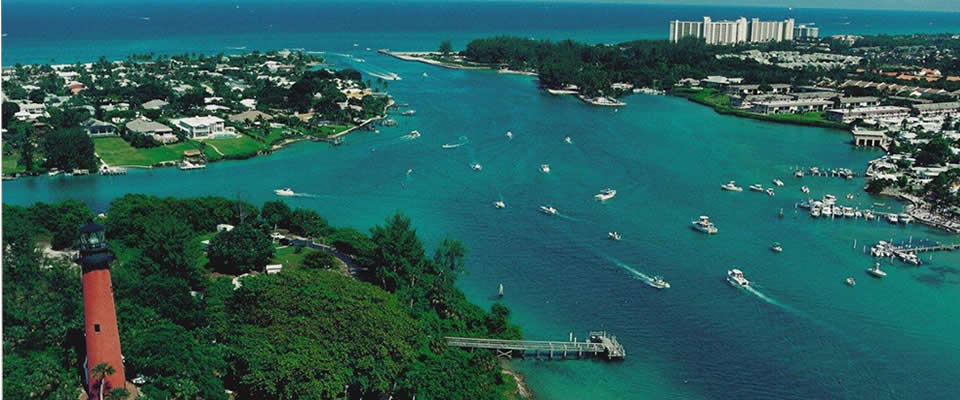
Why we live near the water…
What will I need for insurance
I get this question often: Chris, what will I need for insurance?
First, the easy answer. If you do not have a mortgage then you don’t ‘need’ any insurance.
If you do not have a mortgage then you do not have to have the following but you really should consider if the risk if worth it. If the property is financed then your lender will require:
1) A Home Owners Policy for things like fire, water leaks, theft and liability. Liability is really what your after here for most of us. You should consider this for detached homes as well as condominiums and town homes. This policy typically covers NON-named storms.
2) A named windstorm policy for named storms a/k/a hurricanes. This is the big ticket item and can run several thousand dollars a year. If your home was built after 2002 (under the 2001 Florida Building Code) you’re in good shape. If it was built prior to 2002 you should apply for wind mitigation credits for things like hurricane shutters. The best time to do this is at the property inspection. Ask you insurance agent for the forms. These credits can save you as much as 70% of the unadjusted premium.
If your buying a property in a condominium then it almost certainly has a named wind storm policy however keep in mind that this policy ONLY COVERS THE ASSOCIATION PROPERTY. This is typically from the unfinished floors and walls outward. So this policy would cover the structural elements and the drywall but not the flooring, paint, light fixtures, carpet, tile, CABINETS & COUNTERS, etc.
3) A flood insurance policy. These are for floods or when the water comes up from below into your property. If you’re in a condo then probably only the first floor is affected. If you have a mortgage then it is required if the property is in an ‘A’ Zone AND the living space is below a certain elevation. To determine the flood zone the property is in go to the FEMA web site https://msc.fema.gov/portal/
Then you will need an elevation certificate which is done when the property is surveyed if it’s a single family home or a town home. If it’s a condo then the agent may be able to determine if a policy is required by your lender by looking at the association policy.
Don’t forget that these policies are paid for in advance. If you are financing the purchase then the premium is collected at the Closing and the policy paid. Then the lender collects 1/12 of the renewal premium every month.
While I’m certainly not a fan of insurance I can see why a lender would require it and why it’s something we all should consider the necessity of having in place.
Flood Insurance Disclosure
The Florida Association of Realtors released a new Flood Insurance Disclosure today…