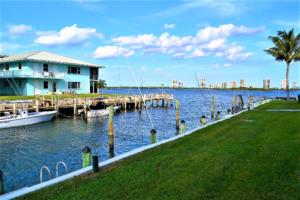
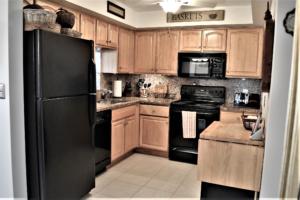
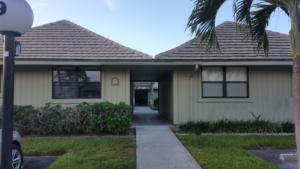
R&R Realty has a new listing in the Marina Tower in Old Port Cove in North Palm Beach. 108 Lakeshore Drive, 439 is located in the NW corner.
Are use restrictions recorded?
Are use restrictions for a property recorded in the Public Record?
Typical use restrictions for condominiums are things like:
Pets – No pets or 2 pets under 25 lbs ect
Vehicles – No trucks, no commercial vehicles
Renting – No renting for the first year of ownership or minimum 90 day lease term and not more than twice a year.
In a condominium these use restrictions are typically found in the recorded declaration of condominium (or amendment thereto) documents in a section titled ‘Use Restrictions’. HOWEVER, if these recorded documents are silent on a particular issue and these same recorded documents allow for the board to adopt rules then the Board of Directors may adopt “reasonable” rules. What’s reasonable? That’s open for interpretation but I recently listed a property where the board adopted a policy that trucks were allowed nut only certain sized, non-commercial ones and they must be parked in certain spots. Reasonable?
In a Home Owners Association (HOA) , as of July 1, 2018, a new law found in FS 720.306(1) requires that all “amendments to the governing documents” must be recorded in the public record to be enforceable. The definition of “governing documents” under Chapter 720 includes board adopted rules. So, if the board-adopted rules existing before July 1, 2018, have not been recorded, that is OK (assuming the association’s other governing documents did not already require it). However, as of July 1, any amendments to the existing rules must be recorded in the public records.
469 Juno Dunes Way, Juno Beach
469 Juno Dunes Way is a move-in ready townhouse in the townhouse community of Juno Dunes in Juno Beach, Florida. This 2 bedroom, 2.5 bathroom unit is spread over 3 floors. As you enter the unit you can go down to a ground floor bedroom and bathroom and the 1 car garage or go up a level to the living room, eat-in kitchen and powder room. The top floor has the master suite which is made up of a spacious bedroom and multiple closets, including walk in closets and a large master bathroom with double sinks, a bathtub and walk in shower. The unit has impact hurricane windows and is light and bright. Pack your bags to live in this delightful beach townhouse. Juno Dunes permits 1 pet under 50lbs but trucks and RVs are not permitted. There is a community swimming pool and the neighborhood is across the street from a park, Pelican Lake and the beach.

Who pays the Condominium ‘Transfer Fee’
Who pays the Condominium ‘Transfer Fee’?
First, how much can they charge? Basically $100 for each applicant over 18 but a married couple is considered one applicant under this statute…
718.112 reads in part…
“(i)Transfer fees.—No charge shall be made by the association or any body thereof in connection with the sale, mortgage, lease, sublease, or other transfer of a unit unless the association is required to approve such transfer and a fee for such approval is provided for in the declaration, articles, or bylaws. Any such fee may be preset, but in no event may such fee exceed $100 per applicant other than husband/wife or parent/dependent child, which are considered one applicant. However, if the lease or sublease is a renewal of a lease or sublease with the same lessee or sublessee, no charge shall be made. The foregoing notwithstanding, an association may, if the authority to do so appears in the declaration or bylaws, require that a prospective lessee place a security deposit, in an amount not to exceed the equivalent of 1 month’s rent, into an escrow account maintained by the association. The security deposit shall protect against damages to the common elements or association property. Payment of interest, claims against the deposit, refunds, and disputes under this paragraph shall be handled in the same fashion as provided in part II of chapter 83.”
And who pays for this? In the standard FAR/BAR As-Is (Rev 04/17) line 142 has the the Buyer paying “HOA/Condominium Association application/transfer fees”. In short, the Buyer.
But what about when the Buyer pays the $100 application fee when making application, which it typically required within 5 days of the Effective Date, and then the association puts a ‘transfer fee’ to be collected at Closing on the Estoppels Letter sent along to the Closing Agent to be collected at Closing? Here’s the problem. The application fees were a nice source of income for the managers. They were dead set against this change in the law which was made fairly recently. So the first attempt is to use an old application that states the application fee is something more than $100. Some people pay this and some people will call foul. The next try is to place a ‘transfer fee’ on the Estoppels Letter. Since this is only seen when buyer looks at the closing statement and after they are typically fully committed to purchasing the Property. If the Buyer questions it then the Closing Agent simply sais 1) If we change anything then it will delay the Closing, because 2) I’m just a Closing Agent so I have to collect whatever is on the Estoppels. You, the Buyer will need to take this up with them. After the Closing no one sues anyone over $100 and now the Buyer lives in that community.
What is the FINCEN Geographic Targeting Order
What is the FINCEN Geographic Targeting Order?
If your looking at property for 1 million or more in Miami-Dade, Broward or Palm Beach County and you are planning on paying cash for the property and taking title in the name of a corporation or trust or something similar, then you should look into the FINCEN Geographic Targeting Order or GTO. Basically the US government has decided (and the stats have shown this to be correct) that foreigners are using residential real estate in the US a vehicle for laundering money. So, if you buy a property for more than a million the US government wants to know who the ‘natural person’ behind the ‘shell’ company or trust is and where they got a million bucks in cash to buy some real estate in sunny Florida.
CLICK HERE to read to original GTO.
CLICK HERE to read the renewed GTO.
How to tell if a lot has city water
How do I tell if a lot of land has city water available to it in Palm Beach County?
I found a great way to do this recently. Look the property up in the Palm Beach County GIS system…
https://maps.co.palm-beach.fl.us/mygeonav/#
Turn on the layer for ‘Fire Hydrants’ under ‘All Other’. If a community has Fire Hydrants then it has city water available.
Also, you can look up at the service maps for folks like Seacoast.
- « Previous Page
- 1
- …
- 115
- 116
- 117
- 118
- 119
- …
- 180
- Next Page »