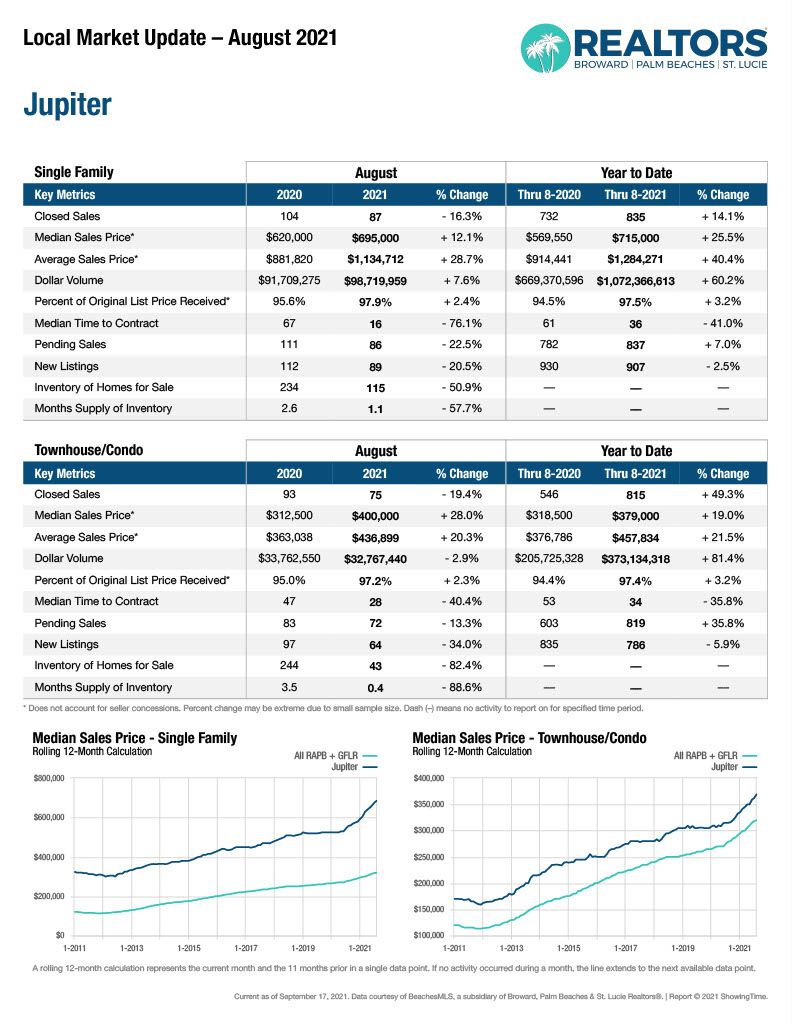
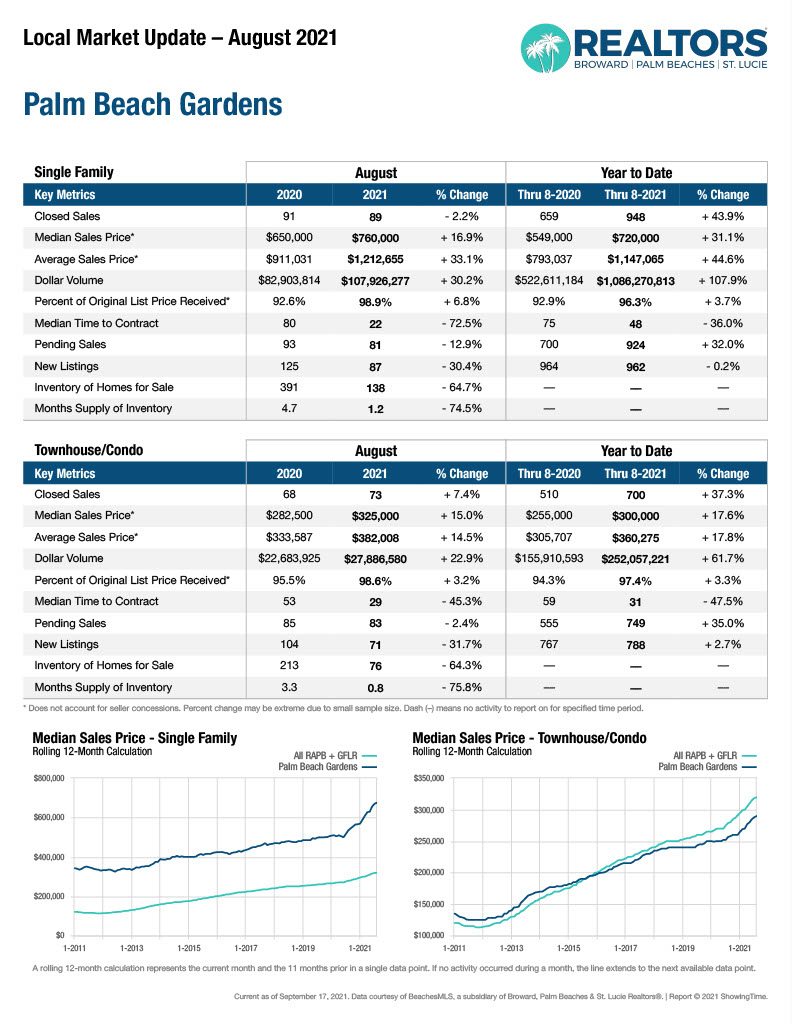
No surprises for August 2021 in the North County. Prices continue to go up.
R&R Realty - Jupiter Real Estate
Find Jupiter-Palm Beach Gardens-Juno Beach-Singer Island-Jupiter Island property.
No surprises for August 2021 in the North County. Prices continue to go up.
OK, so I just got my hands on the new FEMA Flood Insurance Manual (FIM) and there are a few items to discuss to make sure your agent rates your Palm Beach County home. What are the variables?
Since I wrote this they published this Risk Rating 2.0 Rate Explanation Guide
The address or Lat and Long coordinates of the primary insured structure. Where they are estimating the DIFFERENCE in the elevation of the first floor of your house from the Lowest Adjacent Grade (LAG) from space this is important especially on multi acre properties. If you have and Elevation Certificate (EC) from a land surveyor then I would let your agent quote the policy WITHOUT the benefit of this first, then ask what the number is and compare it to those on the EC. On the EC this is C(2)(a)-C(2)(f).
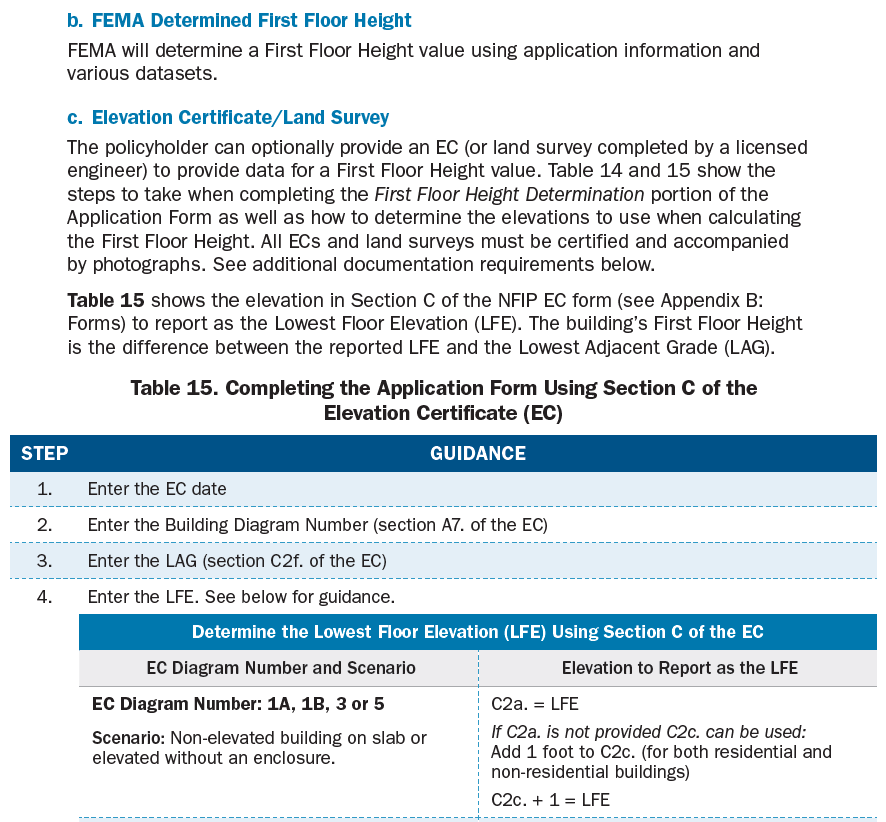
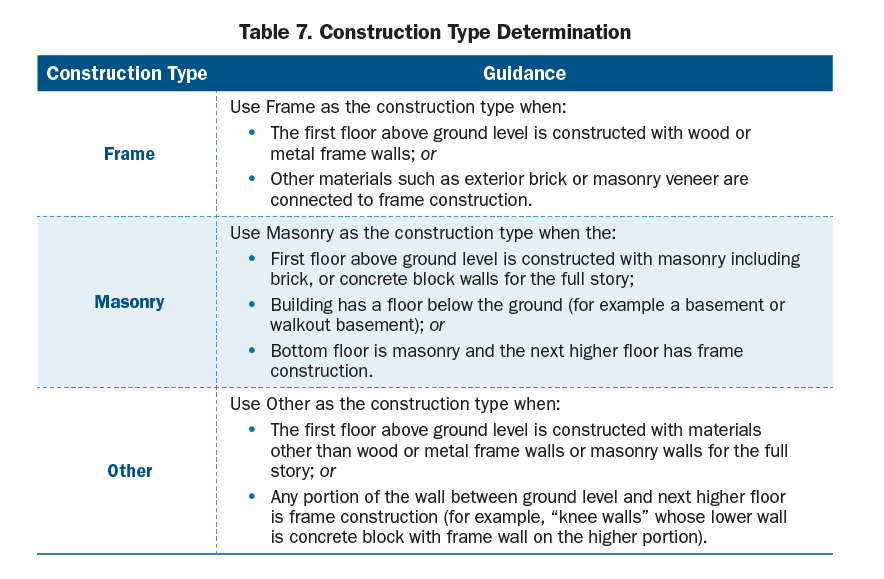
THIS IS NEW. Much like our hurricane insurance a factor in the rating and calculation of the premium is the construction of the home’s first floor of living space.
For the Foundation type in this area MOST of us will have the Foundation Type as a slab on grade or for some of the historic homes it will be a stem wall.
They do also now have “mitigation discounts” just like wind storm policies but unless your AC AND the water heater are above your first floor ceiling the forget it.
Most folks have no idea on what the cost to buy a house is. Sounds like a trick question right? If the house is 500k then that’s what it cost. NOOOOO!
OK, so let’s assume that you will be financing 400k the 500k purchase and that you will be utilizing the FAR/BAR As-Is contract. NOTE: The costs associated with your loan will vary from one lender to the next so check these with your lender.
General Property Inspection – $500.
Termite inspection for a Wood Destroying Organism (WDO) – $80.
Application to HOA – $250?
Application to COA – $100?
Land Survey – $450
Fl Intangible Tax = 0.002*(Loan Amount) = $800
Fl tax on the debt = 0.0035*(Loan Amount) = $1,400
BTW, this Contract has the Seller paying the doc stamps on the deed. ($3,500)
Record Deed and Mortgage in public record = ~$200
Fee to the Closing Agent to close the loan = $750
Prepay the first year of Flood Ins = $600 ???
Prepay the first year of Home Owners Insurance = $1,500 ???
Prepay the first year of Wind Storm Insurance = $4,000 ???
Starting Escrow account funds for 3 months of insurance and taxes. If the taxes are $8,000 per year then 3/12*(600+1500+4000+8000) = $3,525
Lenders Title Insurance Policy = ABOUT $400.
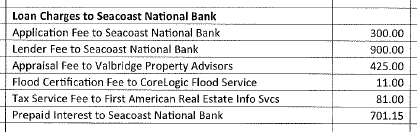
And, this is an example of some of the fees your Lender will charge:
The 2021 hurricane season began June 1, but water pipes can burst year-round. If an insurable event occurs in a condo, however, is it a unit owner’s job to pay or the association’s? It’s a simple question with a sometimes complicated answer.
Condos: Who Insures What? Who Pays for Damages?
By Rob Samouce
The 2021 hurricane season began June 1, but water pipes can burst year-round. If an insurable event occurs in a condo, however, is it a unit owner’s job to pay or the association’s? It’s a simple question with a sometimes complicated answer.
NAPLES, Fla. – Questions often arise when there is an insurable event (such as when a water or sewer pipe bursts), who pays for the damage? The condominium association or the unit owner? The answer will depend upon what the damaged items are. Section 718.111(11)(f), Florida Statutes, provides that: “(f) Every (Condominium Association) property insurance policy issued or renewed on or after January 1, 2009, for the purpose of protecting the condominium must provide primary coverage for:
- All portions of the condominium property as originally installed or replacement of like kind and quality, in accordance with the original plans and specifications.
- All alterations or additions made to the condominium property or association property pursuant to s. 718.113(2).
- The coverage must exclude all personal property within the unit or limited common elements, and floor, wall, and ceiling coverings, electrical fixtures, appliances, water heaters, water filters, built-in cabinets and countertops, and window treatments, including curtains, drapes, blinds, hardware, and similar window treatment components, or replacements of any of the foregoing which are located within the boundaries of the unit and serve only such unit. Such property and any insurance thereupon is the responsibility of the unit owner.”
So, the association’s insurance policy covers the structures of the building(s) as originally installed or replaced, plus all approved alterations or additions to the building(s). The association policy also covers the unit A/C equipment (this was a change to the statute after Hurricane Irma to insure that all the air conditioning is repaired and turned on as quick as possible after a hurricane to prevent mold growth). The unit owners’ policies, if obtained, cover their personal property and some fixtures within the unit and floor, wall and ceiling coverings. The drywall in the units and the stuff behind the drywalls is the association, wherein the paint or wall paper on the drywall is insured by the unit owner. While the association is required to carry insurance on the structures, the statute does not require unit owners to carry a unit policy, and many unit owners decide to self-insure their unit and not carry unit insurance unless their Declaration of Condominium requires them to do so (most do not). Many owners who do not have a mortgage decide to take the risk of self-insuring their condominium unit. Another question that often arises is who pays for the dry-out of the unit (fans etc.) from a pipe burst, as the statute is silent on this. As both the association benefits from the dry-out (less chance of mold behind the walls) as well as the unit owner (property saved from turning moldy green or black), the dry out cost should be shared proportionally between the association and the unit owner depending upon how much they benefit. If it cannot be determined a proportional share, the dry out cost is usually shared equally – 50/50. Who pays the association deductible for an internal unit drywall repair (unit perimeter drywall is Association responsibility) can be a complicated answer and depends upon whether there was ever a deductible opt-out vote of the members or not. If that question arises, you should check with your association’s legal counsel. For non-insurable event damage (such as mold growth from a slow water leak over an extended period of time), you will need to look at your governing documents maintenance, repair and replacement responsibilities usually contained in your Declaration of Condominium to determine whether the association or the owner must pay for the repair. Rob Samouce is a principal attorney in the Naples law firm of Samouce & Gal, P.A. He is a Florida Bar Board Certified Specialist in Condominium and Planned Development and concentrates his practice representing condominium, cooperative and homeowners’ associations in all their legal needs including the procedural governance of their associations, covenant enforcement, assessment collections, contract negotiations and contract litigation, real estate transactions, general business law, construction defect litigation and other general civil litigation matters. This column is not based on specific legal advice to anyone and is based on principles subject to change from time to time. © 2021 Journal Media Group
By Joel Maxson
A buyer insists on seeing the Seller’s Property Disclosure. Equally adamant, the seller refuses to fill one out. What happens next? The buyer’s Realtor calls Florida Realtors Legal Hotline to find out what they can – and cannot – demand.
ORLANDO, Fla. – Based on what we hear on Florida Realtors Legal Hotline, most residential sellers are content to complete the Florida Realtors Seller’s Property Disclosure – Residential form (SPDR), or its condominium counterpart, when they enter into a listing agreement. However, every now and then a seller balks at the idea of completing this form, prompting a member to ask what Florida law requires regarding disclosures. Although sellers are not required to complete this specific SPDR disclosure form, a residential seller does have to comply with the rule established in Johnson v. Davis. In that case, the Florida Supreme Court held that “where the seller of a home knows of facts materially affecting the value of the property which are not readily observable and are not known to the buyer, the seller is under a duty to disclose them to the buyer.” These material facts are sometimes referred to as latent defects. This disclosure can be made in writing or verbally, although Florida Realtors’ attorneys recommend it be made in writing. If you’re on the listing side of the conversation, can you force your seller to complete a seller’s disclosure, SPDR or otherwise? No, not unless you add that requirement to your specific listing agreement. That said, the Florida Realtors Exclusive Right of Sale listing agreement places three significant obligations on the seller. The first is that seller must “Make all legally required disclosures.” This is a sweeping obligation that includes complying with any federal, local, or contractual disclosure requirements, in addition to the general rule from Johnson v. Davis. The listing agreement also obligates sellers to certify and represent that they have written in the listing agreement all “material facts (local government building code violations, unobservable defects, etc.).” The final obligation is to “immediately inform Broker of any material facts that arise after signing this Agreement.” The SPDR form contains safeguards to ensure the seller completes the form, not the associate or broker. As a reminder to all parties, the first line of the SPDR provides “Notice to Licensee and Seller: Only the Seller should fill out this form.” As a related issue, some brokerage companies may require that certain documents (like a seller’s property disclosure) be maintained in a file, so associates should always ensure they understand and comply with any specific requirements their company may have. Can a buyer’s representative force the seller or listing agent to provide a seller’s disclosure? No. They are welcome to ask but will occasionally encounter a seller who is unwilling to complete one. From a buyer’s perspective, it’s always a good idea to conduct thorough due diligence. Without the aid of a seller’s disclosure, a buyer may want to investigate the property more thoroughly during the inspection period. Joel Maxson is Associate General Counsel for Florida Realtors Note: Advice deemed accurate on date of publication © 2021 Florida Realtors®
Florida Realtors and the Florida Bar work together to keep FR/Bar contracts current and useful, and the latest update has just received final approval from both groups. Members will have time to study the changes before it replaces current forms on Nov. 1. The AS IS contract, Residential contract and seven Riders were updated, and three new Riders were created.
ORLANDO, Fla.

I LOVE math. It pulls back the curtain of deceit. In November 2025 the Village made a preemptive move to collect Fire services via a non-Ad Valorem charge. I had previously made up a spreadsheet to calculate the taxes of the surrounding municipalities so this is easy to do with real numbers. Northern-PB-County-Property-TaxesDownload For the 2025 tax bill (the one we got last November) the […]

OK, we all know that since 1992 the Seller must provide the Buyer of a condominium in Florida a litany of documents But who is required to actually complete the FAQ form? In short, the Asociation as required by the Florida Administrative Code 61B-23.022 FAC (7)(a) Each association, regardless of control, must prepare and maintain as part of its official records, a completed Frequently Asked […]

Click HERE for the MLS data Coming Soon to Sea Colony! Desirable 3-bedroom, 3-bathroom home with a 2-car garage across from Jupiter Dog Beach. This big-dog-friendly residence features a single-family feel, soaring ceilings, and modern updates including a 2026 A/C system, impact windows, new appliances, luxury vinyl plank flooring, and porcelain tile bathrooms. Enjoy 24-hour manned security and resort-style amenities including pool, fitness center, tennis, […]